|
.: E-ISSN : 3110-7427:. .: P-ISSN : 3164-2705:. |
|
|
| .: Additional Menu :. |
| .: Information :. |
| For Readers |
| For Authors |
| For Librarians |
| .: Tools :. |
 |
 |
| .: Membership :. |
 |
| .: Journal Template :. |
 |
 |
| .: Contact :. |
 |
| .: Visitors :. |
|
|
Archives
-
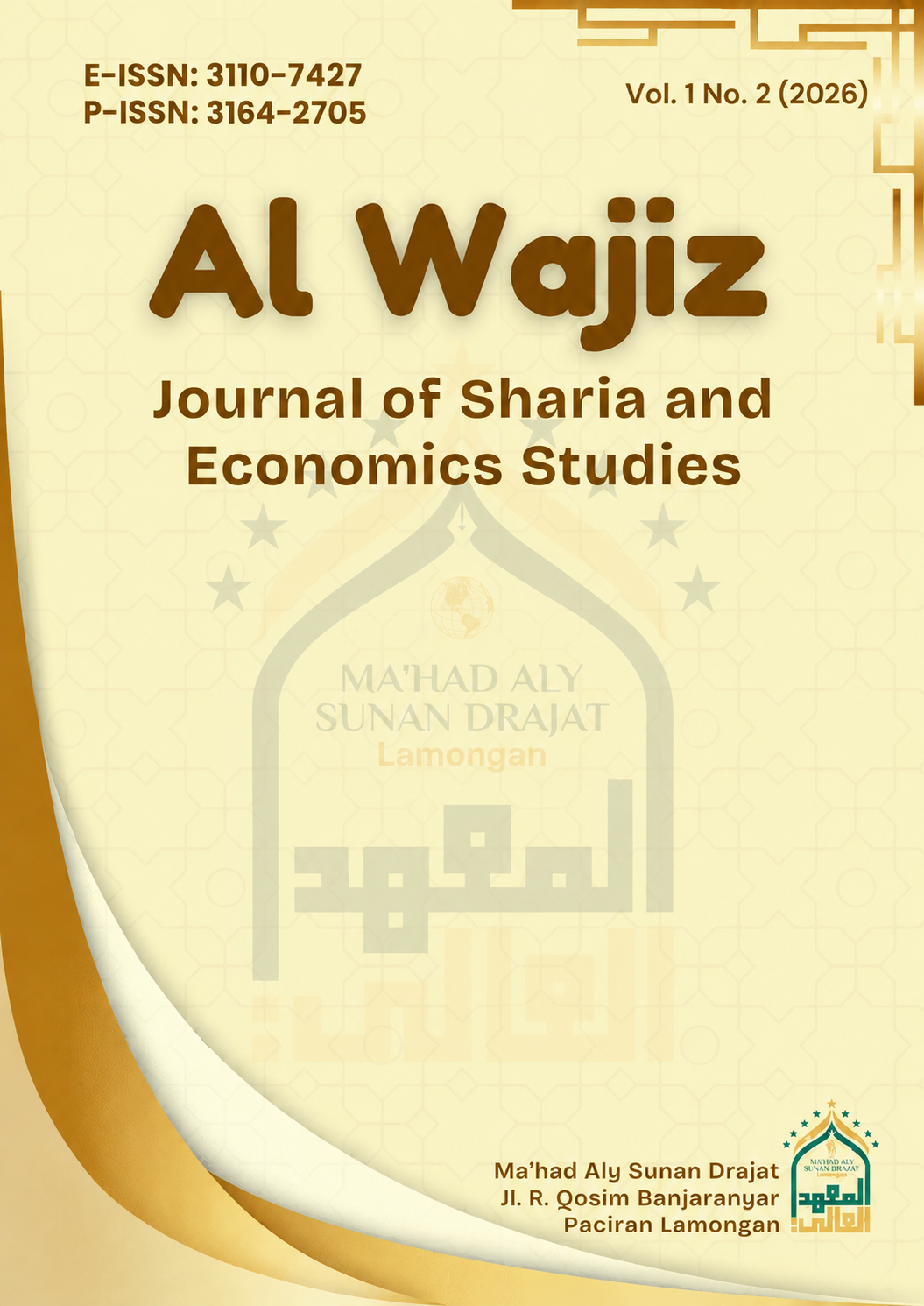
Al Wajiz: Journal of Sharia and Economics Studies
Vol. 1 No. 2 (2026)The April 2026 issue of Al Wajiz: Journal of Sharia and Economics Studies presents research from scholars across five countries: Indonesia, Malaysia, Qatar, Sudan, and Netherlands. This issue highlights contemporary discussions in Islamic jurisprudence, legal theory, and Islamic economics by integrating classical scholarly traditions with present-day challenges.
The published articles examine a wide range of topics, including the legal reasoning ('illah) of ribā in relation to modern money, the Islamic legal assessment of natural resource downstreaming through the lens of maṣlaḥah and mafsadah, the historical formation of classical Islamic law and its methodological foundations, the jurisprudential status of the sale of sacrificial animal skins within the Nahdliyin tradition, and the conceptual distinctions between dalālah, 'illat, and manāṭ al-ḥukm in uṣūl al-fiqh and their relevance to contemporary ijtihād, particularly in Islamic economics.
Collectively, these contributions demonstrate the continuing relevance of classical Islamic legal scholarship in addressing contemporary legal, economic, environmental, and societal issues, while fostering international academic collaboration in the fields of Sharia and Islamic economics. -
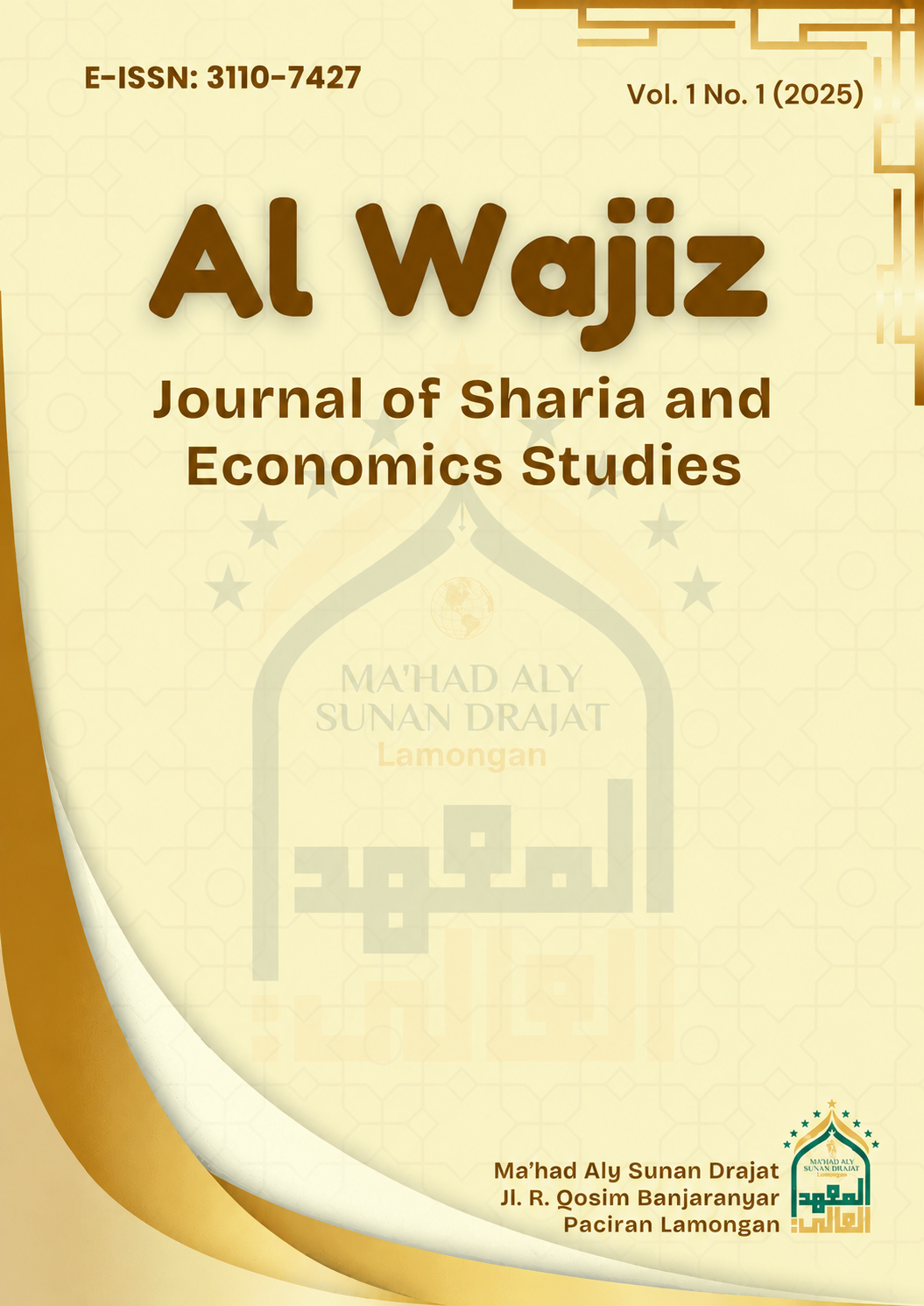
Al Wajiz: Journal of Sharia and Economics Studies
Vol. 1 No. 1 (2025)The October 2025 issue of Al Wajiz: Journal of Sharia and Economics Studies presents research from scholars across Indonesia. This issue highlights contemporary discussions in Islamic jurisprudence, Islamic economics, and pesantren-based education by integrating classical scholarly traditions with present-day challenges. The published articles examine a wide range of topics, including the development of entrepreneurial mentality among santri through the lens of Maqashid Syariah, risk management strategies of Sharia microfinance institutions in the era of digital disruption, the role of pesantren in cultivating religious character among millennial youth with a conceptual study at Pondok Pesantren Sunan Drajat Lamongan, the legal tension between the guardian's right of ijbar and the principle of consent in Islamic marriage law, and the practice of market maker movements in Sharia-compliant stocks from the perspectives of Maqashid Syariah and Fiqh Muamalah. Collectively, these contributions demonstrate the continuing relevance of classical Islamic legal and ethical scholarship in addressing contemporary economic, social, educational, and financial issues, while strengthening national academic discourse in the fields of Sharia and Islamic economics. -
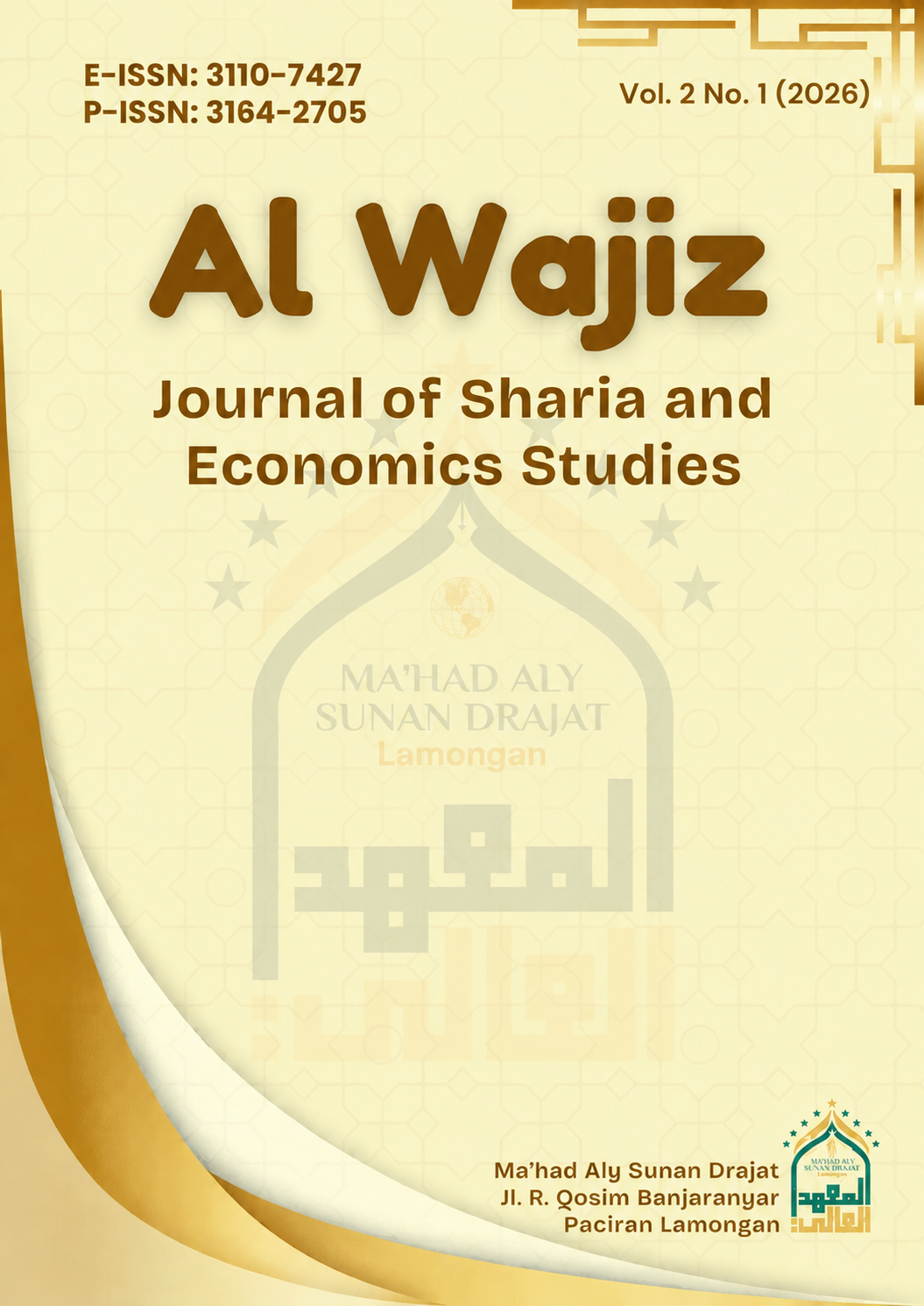
Al Wajiz: Journal of Sharia and Economics Studies
Vol. 2 No. 1 (2026)Al Wajiz: Journal of Sharia and Economics Studies is a scientific journal that focuses on publishing research findings, theoretical studies, and conceptual thoughts related to Islamic Law (Sharia) and Economics. This journal aims to serve as an academic platform that bridges classical and contemporary perspectives, thereby contributing to the advancement of knowledge, practice, and policy in the fields of Islamic law and economics. Published twice a year, namely October and April.